 当前位置: 符合性组件
当前位置: 符合性组件工作组: FHIR Infrastructure  | 标准状态: Informative |
符合性组件用于表示FHIR规范中数据类型、资源和API功能的元数据,并且可以通过继承原规范来创建扩展规范。
FHIR核心规范描述了在多种不同卫生健康场景使用的一系列资源、框架和API。然而,贯穿于整个卫生健康生态系统中的实践、需求、法规、教育以及可行性、效益等在不同的国家和地区都存在很大差异。
由此看来,FHIR规范是一个“平台规范”——它创建了一个通用平台或基础框架,并在该平台框架上实现了各种不同的解决方案。 因此,为了适应特定的使用场景境,通常需要对本规范作进一步适应性配置。
通常,这些配置将指定::
请注意,由于卫生健康生态系统的特性,从不同角度来配置符合性可能存在多个重叠的配置集合:卫生健康领域、国家、机构、实施厂商。
FHIR提供了一组资源,以计算机能理解的方式来表示和共享上述适应性配置。 这些资源统称为符合性资源。尽管这些符合性资源可以单独使用,但用于实施指南或能力声明的上下文中更为常见:
实施指南的内容是用 ImplementationGuide 资源来说明的, 而 CapabilityStatement 资源则用于表示能力声明。 这两种资源利用完整的符合性资源集可以完整的表示它们所采用的标准。 请注意,实施指南资源ImplementationGuide只是描述系统的功能,而能力声明资源CapabilityStatement作为符合性资源,是所有符合性资源的集合,它包含了:
符合性资源可以独立使用,而不仅仅是用于实施指南资源或能力声明资源的上下文中。 有关此类使用的示例,请参见常见用例小节。
符合性资源及其相互关系见下图:
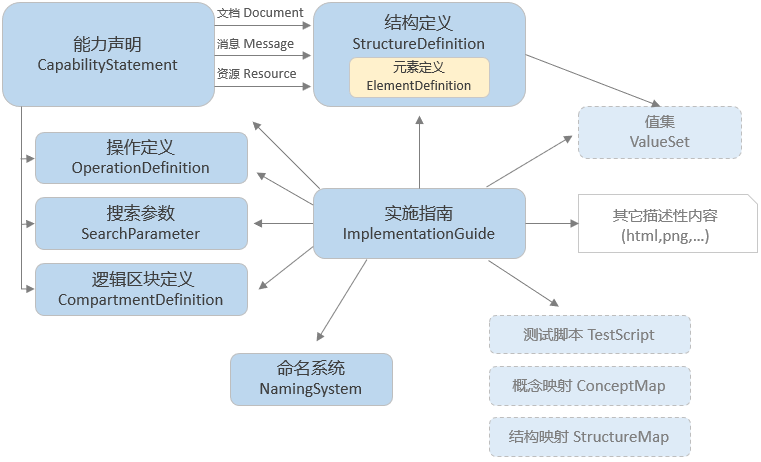
虚线框中的资源将在本规范的其它章节介绍:
值集、概念映射 和 结构映射图
属于术语组件,
测试脚本 属于
实施支持组件.
The conformance resources do not represent patient-related data, and as such are less susceptible to data breaching. Some caution is required however:
StructureDefinitions may contain invariants formulated as structured
expressions that are evaluated by external engines (i.e. xpath), which -if improperly
sandboxed- could provide low-level access to the systemConformance resources are commonly used as part of an Implementation Guide or CapabilityStatement resource. There are many ways to use the resources independently however, including:
StructureDefinitions to
claim conformance to the rules laid out in those StructureDefinitionsCapabilityStatement resources, effectively functioning
as a discovery endpoint for services within an organizationStructureDefinitions and
OperationDefinitions to generate code that represents the structures as
classes and operations as remotely callable functions to provide an easier programming
model to a software developer. NamingSystem resources, so vendors and
implementers can quickly look up the URLs or oids for a given terminology or identifier
system.A subset of the conformance resources has been tested and used in production tooling and are now normative. These include StructureDefinition and ValueSet. Others, like CapabilityStatement, have been used widely, but not across all elements. As a consequence, these resource have a considerable number of elements marked for "trial use", while other parts are normative and will no longer change in a substantive way.
Other resources are still under development:
ImplementationGuide: used in the HL7 production tooling but has not received much use
outside of these tools yet.CompartmentDefinition: was new in STU3, and as such has not undergone much production
useThese resources have been mainly used in the tools used to build the FHIR publication, early-adopter implementation guides and the FHIR Foundation conformance resource registry. In future, we expect to see more widespread use of these resources in validation tooling, code-generators and more extensive model-based guide authoring tools.